
Blog
Clothing Manufacturers: Everything You Need to Know Before Choosing a Custom Manufacturing Partner

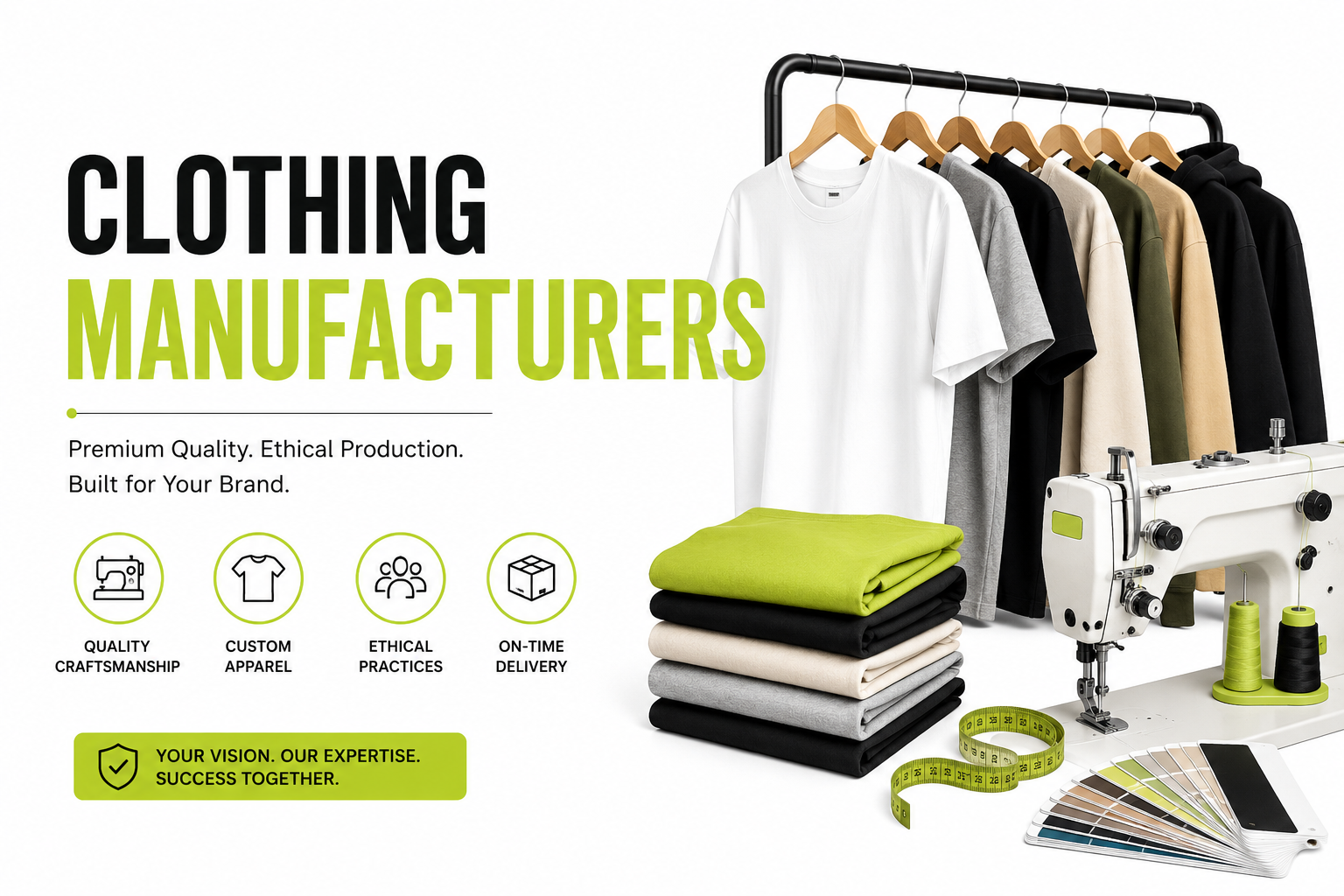
Finding reliable clothing manufacturers is one of the most important decisions for any clothing brand, startup, sportswear company, or promotional apparel business. A trusted manufacturing partner doesn’t just produce garments—they help maintain your brand reputation, improve product quality, reduce production costs, and ensure timely delivery.
Whether you’re launching a new fashion label or expanding an established business, working with an experienced custom clothing manufacturer allows you to create premium apparel that matches your vision while meeting customer expectations.
In this guide, we’ll explain how clothing manufacturers operate, what separates professional manufacturers from average suppliers, and what you should look for before placing your first order.
Why Choosing the Right Clothing Manufacturer Matters
The clothing industry has become more competitive than ever. Customers now expect:
- Premium fabric quality
- Comfortable fitting
- Modern designs
- Durable stitching
- Fast delivery
- Sustainable manufacturing
Your manufacturer directly affects every one of these factors.
From fabric sourcing to final packaging, every production stage influences your customer satisfaction and brand reputation.
What Do Clothing Manufacturers Actually Do?
Professional clothing manufacturers handle the complete production process from concept to finished product.
Their services often include:
- Product development
- Pattern making
- Fabric sourcing
- Sampling
- Custom design
- Printing
- Embroidery
- Cutting
- Sewing
- Quality inspection
- Packaging
- Worldwide shipping
Instead of managing multiple suppliers, businesses can streamline production through one experienced manufacturing partner.
Core Manufacturing Processes Every Brand Should Understand
1. Product Development
Every successful garment begins with an idea.
Manufacturers work closely with clients to understand:
- Target audience
- Product purpose
- Design preferences
- Material requirements
- Budget
An experienced manufacturer helps refine the design before production begins.
2. Fabric Selection
Fabric selection determines:
- Comfort
- Durability
- Appearance
- Performance
Common materials include:
- Cotton
- Polyester
- Cotton-poly blends
- Fleece
- French Terry
- Spandex
- Nylon
- Performance fabrics
The right manufacturer offers multiple fabric options suitable for different products.
3. Pattern Making
Patterns ensure every garment maintains consistent sizing.
Professional pattern makers create accurate templates that reduce production errors and improve fitting.
4. Sampling
Before mass production starts, manufacturers create product samples.
Sampling allows brands to verify:
- Measurements
- Fabric quality
- Printing
- Embroidery
- Colors
- Stitching
- Overall appearance
Making improvements during sampling saves significant costs later.
5. Bulk Manufacturing
Once samples receive approval, production begins.
Professional factories use organized production lines that maximize efficiency while maintaining consistent quality.
6. Quality Control
Reliable clothing manufacturers inspect products throughout production.
Quality checks include:
- Stitching accuracy
- Fabric inspection
- Size verification
- Printing quality
- Embroidery inspection
- Color consistency
- Packaging
Strict quality control reduces defective products and customer complaints.
Types of Apparel Manufactured
Modern custom manufacturers produce a wide variety of garments, including:
Sportswear
Sports apparel requires breathable fabrics, flexible materials, and durable construction.
Examples include:
- Jerseys
- Compression wear
- Tracksuits
- Shorts
- Training apparel
Streetwear
Growing fashion brands often require:
- Hoodies
- Sweatshirts
- Oversized T-shirts
- Joggers
- Cargo pants
Customization plays an important role in streetwear manufacturing.
Corporate Apparel
Businesses frequently order:
- Polo shirts
- Uniforms
- Jackets
- Office shirts
- Workwear
Consistent branding helps companies maintain a professional appearance.
Casual Clothing
Manufacturers also produce:
- T-shirts
- Tank tops
- Leggings
- Sweatpants
- Pajamas
- Children’s clothing
Custom Manufacturing Services
Professional clothing manufacturers offer complete customization.
These services often include:
Custom Logos
Brand logos can be added through:
- Screen printing
- Embroidery
- Heat transfer
- Silicone printing
- Puff printing
Private Label Manufacturing
Private labeling allows businesses to sell products under their own brand.
Manufacturers can produce:
- Custom neck labels
- Hang tags
- Packaging
- Wash labels
- Brand stickers
This creates a fully personalized customer experience.
Custom Packaging
Packaging has become an essential part of modern branding.
Options include:
- Branded poly bags
- Custom boxes
- Tissue paper
- Thank-you cards
- QR codes
- Eco-friendly packaging
How Experienced Manufacturers Ensure Quality
Experienced factories follow standardized production systems.
These include:
Material Inspection
Every fabric roll is checked before production begins.
In-Process Inspection
Production supervisors inspect garments while sewing continues.
Errors are corrected immediately rather than after production ends.
Final Inspection
Finished garments undergo a complete review before shipment.
This ensures customers receive products that meet agreed specifications.
Benefits of Working with Professional Clothing Manufacturers
Choosing an experienced manufacturing partner offers several advantages.
Better Product Consistency
Customers expect the same quality every time they order.
Professional factories maintain consistent production standards.
Lower Production Costs
Efficient manufacturing processes reduce waste and improve productivity.
This helps brands maximize profitability.
Faster Turnaround
Experienced factories understand production scheduling.
They deliver orders on time while maintaining quality.
Scalability
As your business grows, your manufacturer should grow with you.
Reliable manufacturers can increase production capacity without sacrificing quality.
Expert Guidance
Many manufacturers help clients improve:
- Fabric choices
- Product construction
- Cost optimization
- Design improvements
Their experience often prevents expensive production mistakes.
How to Choose the Best Clothing Manufacturer
Not every factory offers the same level of service.
Consider these factors before making a decision.
Manufacturing Experience
Look for companies with proven experience producing garments similar to your products.
Quality Standards
Ask about:
- Quality inspections
- Production processes
- Sample approvals
- Fabric testing
Customization Options
Choose manufacturers capable of handling:
- Printing
- Embroidery
- Private labels
- Custom packaging
- Special fabrics
Communication
Good communication reduces misunderstandings and production delays.
Reliable manufacturers provide regular production updates.
Production Capacity
Your manufacturing partner should comfortably handle future growth.
Changing factories frequently can disrupt your business.
Actionable Steps Before Hiring a Clothing Manufacturer
Follow these steps before placing your first production order:
- Clearly define your product requirements.
- Prepare design files and technical specifications.
- Request fabric samples.
- Order a production sample before bulk manufacturing.
- Review quality standards carefully.
- Confirm production timelines.
- Discuss customization options.
- Verify packaging requirements.
- Understand shipping arrangements.
- Build a long-term relationship rather than focusing only on price.
Common Mistakes Brands Should Avoid
Many startups make avoidable manufacturing mistakes.
Avoid:
- Choosing suppliers based only on the cheapest price.
- Skipping the sampling stage.
- Ignoring quality control.
- Providing incomplete product specifications.
- Ordering large quantities without testing the market.
- Failing to establish clear communication.
These mistakes often lead to production delays, quality issues, and increased costs.
First-Hand Industry Insight
From working with apparel businesses and custom manufacturing projects, one lesson consistently stands out: successful brands rarely focus only on getting the lowest production price. Instead, they invest time in building long-term relationships with manufacturers who understand their quality expectations, communicate clearly, and consistently deliver reliable products. This approach often reduces costly revisions, returns, and production delays over time.
Industry Statistics
According to global apparel industry research, consumers are increasingly willing to pay more for higher-quality clothing and products made by trusted manufacturers. Brands that prioritize quality, consistency, and customer satisfaction often experience stronger customer loyalty and repeat purchases. Likewise, supply chain experts emphasize that selecting dependable manufacturing partners is one of the most important factors in maintaining product quality and scaling a fashion business successfully.
Frequently Asked Questions
What is the minimum order quantity (MOQ)?
Minimum order quantities vary depending on the manufacturer, product type, fabric, and customization requirements.
Can clothing manufacturers create custom designs?
Yes. Professional manufacturers can produce fully customized garments based on your artwork, measurements, branding, and specifications.
How long does production usually take?
Production timelines depend on order size, product complexity, customization, and factory workload. Sampling typically takes less time than bulk production.
Can manufacturers add private labels?
Yes. Most custom manufacturers provide private labeling, woven labels, printed labels, hang tags, and branded packaging.
Do manufacturers help with product development?
Experienced manufacturers often assist with pattern making, sampling, material selection, and production optimization.
Conclusion:
Choosing the right clothing manufacturers is one of the most valuable investments any apparel brand can make. A professional manufacturing partner delivers more than garments—they provide expertise, consistency, customization, and long-term reliability.
From product development and fabric sourcing to quality control and custom branding, experienced manufacturers help businesses build products that customers trust and recommend.
If you’re looking for premium custom apparel manufacturing, partnering with an experienced manufacturer that prioritizes quality, communication, and customization can position your brand for sustainable growth in today’s competitive fashion market.